DSA learning roadmap

A Practical DSA Learning Roadmap

Data Structures and Algorithms (DSA) are often treated as a necessary evil, something you grind through only to clear technical interviews. This narrow framing has done more harm than good. It leads to shallow learning, memorized solutions, and frustration when problems slightly change. The truth is simple: DSA is not just about interviews. It is about learning how to think clearly, reason about efficiency, and design solutions that scale. This blog lays out: ...

December 30, 2025 · 5 min · 886 words ·  · By codeverra
DSA learning roadmap

DSA With Python - Zero to Hero (Curriculum)

About This Guide Welcome to the DSA with Python: Zero to Hero comprehensive learning roadmap! This guide serves as the complete reference material for our live course, organizing all topics, concepts, and learning outcomes in a structured, progressive manner. For Course Students If you’re enrolled in the live course, this blog is your companion resource that: Mirrors the course structure - Every module taught in class is documented here Serves as a reference - Quickly look up concepts, syntax, and examples Tracks your progress - Follow along and check off completed modules Provides continuity - Never miss a beat even if you miss a session For Self-Learners Even if you’re not enrolled in the course, this roadmap is designed to be: ...

December 30, 2025 · 11 min · 2324 words ·  · By codeverra
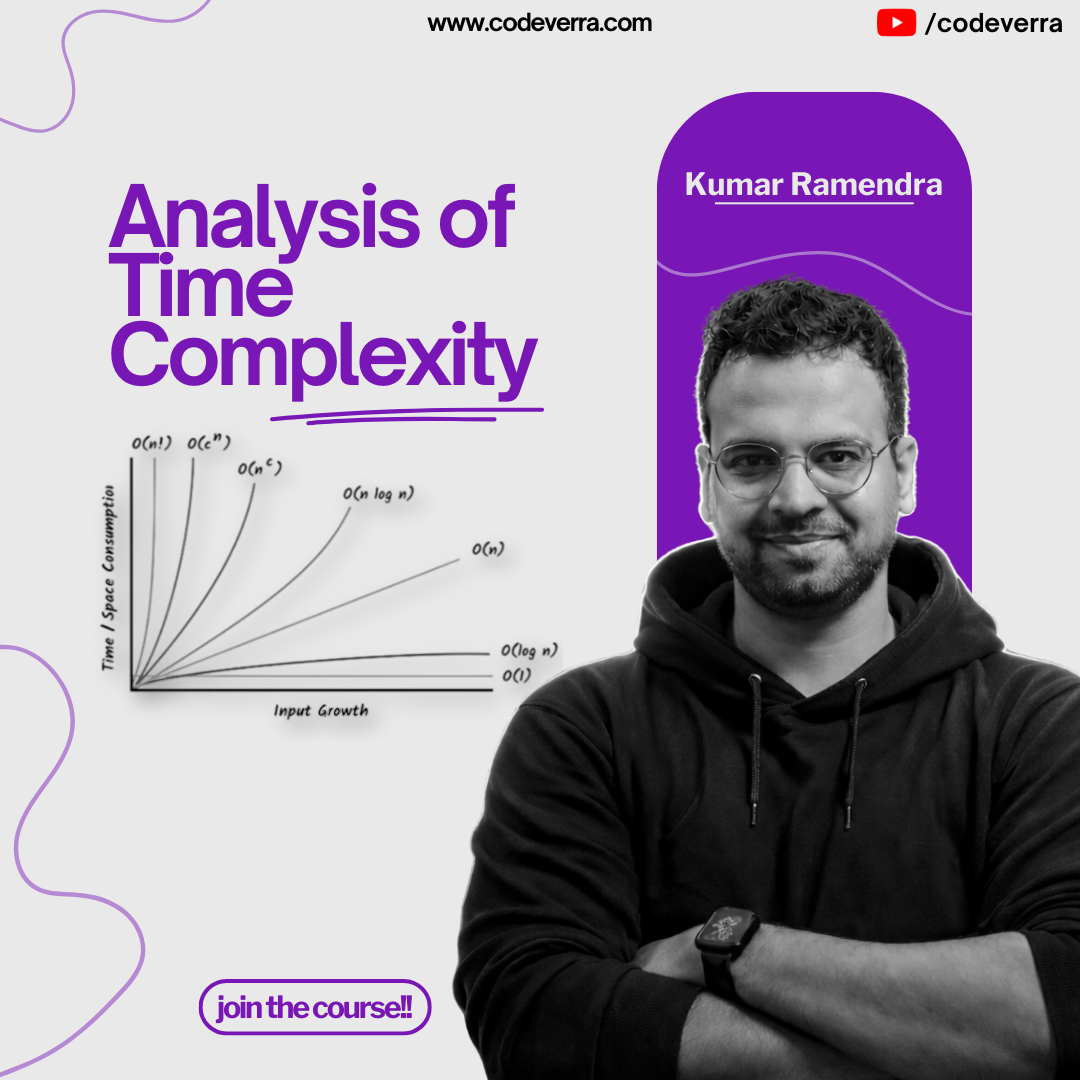
Analysis of time complexity

Analysis of Time Complexity Explained with Python Examples

Time complexity is one of the most important concepts in Data Structures and Algorithms. It helps you understand how an algorithm behaves as the input size grows and why some solutions fail to scale. This guide explains time complexity step-by-step using simple explanations and Python examples written purely as text, focusing on intuition rather than heavy mathematics. 1. What Is Time Complexity? Time complexity measures how the running time of an algorithm grows as the input size increases. ...

December 30, 2025 · 4 min · 784 words ·  · By codeverra
Array problem-solving patterns

Array Patterns for Problem Solving

Array patterns are recurring problem-solving techniques used to solve a wide variety of array problems efficiently. Instead of memorizing individual solutions, understanding these patterns helps you recognize how to approach a problem and design an optimal solution. 1. Traversal Pattern Concept The traversal pattern involves visiting each element of the array once or in a fixed manner. When to Use Finding maximum or minimum elements Printing all elements Counting frequency Simple condition checks Explanation Example Traverse the array from the first element to the last, updating the required result as you move forward. ...

December 30, 2025 · 4 min · 715 words ·  · By codeverra
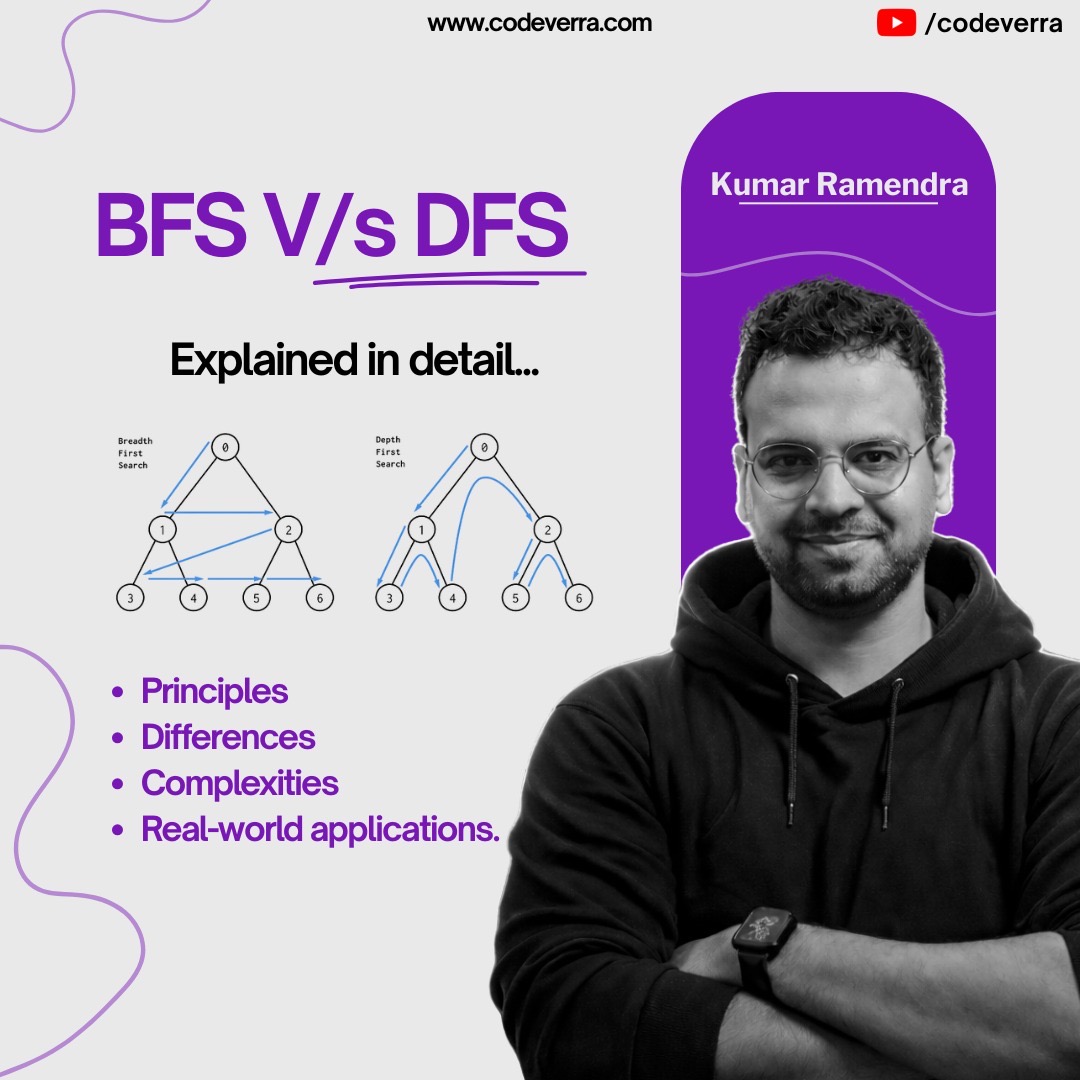
BFS vs DFS graph traversal

BFS vs DFS Explained Clearly

Graphs and trees are non-linear data structures. To process or explore them, traversal algorithms are used. The two most important traversal techniques are: Breadth-First Search (BFS) Depth-First Search (DFS) Both algorithms visit all nodes in a graph or tree, but their strategies and use-cases differ significantly. 1. Breadth-First Search (BFS) Concept Breadth-First Search explores a graph level by level. It visits all neighbors of a node before moving deeper into the graph. ...

December 30, 2025 · 3 min · 630 words ·  · By codeverra
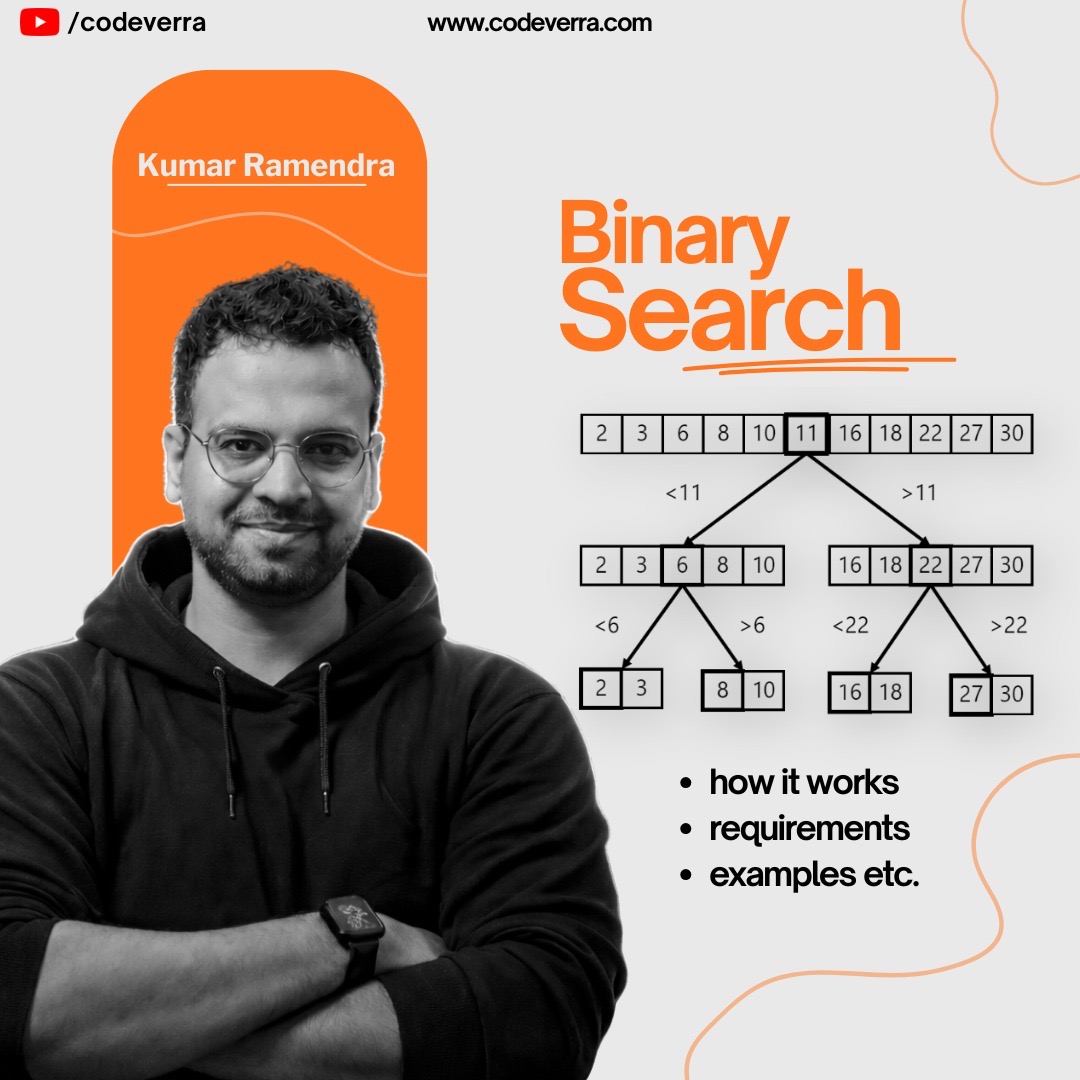
Binary search algorithm

Binary Search Explained Clearly

Binary Search is an efficient searching algorithm used to find an element in a sorted array by repeatedly dividing the search space into half. Unlike linear search, which checks elements one by one, binary search eliminates half of the remaining elements at each step. This makes it significantly faster for large datasets. Key Requirement Binary search can only be applied when the array is already sorted. The sorting order can be: ...

December 30, 2025 · 3 min · 484 words ·  · By codeverra
Dynamic programming concepts

Concept of Dynamic Programming Explained Clearly

Dynamic Programming (DP) is a powerful algorithmic technique used to solve problems that can be broken down into smaller subproblems whose solutions are reused to efficiently compute the final result. Unlike brute-force approaches or naive recursion, Dynamic Programming avoids unnecessary recomputation and significantly improves performance. 1. What Is Dynamic Programming? Dynamic Programming is a method of solving problems by: Dividing a problem into smaller subproblems Solving each subproblem only once Storing the solution of each subproblem Using stored solutions to build the final answer The word dynamic refers to solving problems step by step, while programming refers to structured problem-solving rather than coding. ...

December 30, 2025 · 4 min · 698 words ·  · By codeverra
Sorting algorithms

Different Sorting Algorithms Explained Clearly

Sorting is the process of arranging elements in a specific order, usually ascending or descending, to make data easier to search, analyze, and process. Sorting plays a critical role in computer science because many algorithms perform efficiently only on sorted data. 1. Bubble Sort Concept Bubble Sort repeatedly compares adjacent elements and swaps them if they are in the wrong order. Larger elements gradually move to the end of the array, similar to bubbles rising to the surface. ...

December 30, 2025 · 5 min · 857 words ·  · By codeverra
Recursion concept

Recursion Explained from Basics

Recursion is a programming technique in which a function calls itself to solve a problem by breaking it down into smaller and simpler subproblems. Instead of solving the entire problem at once, recursion focuses on solving a reduced version of the problem repeatedly until a stopping condition is reached. What Is Recursion? In recursion, a function solves a problem by calling itself with a smaller input. Each recursive call works on a reduced version of the original problem until it reaches a point where no further calls are needed. ...

December 30, 2025 · 3 min · 522 words ·  · By codeverra
Searching in arrays

Searching in Arrays (Sorted and Unsorted)

Searching is the process of determining whether a given element exists in an array and, if required, returning its index. The choice of searching technique depends entirely on whether the array is sorted or unsorted. Selecting the correct approach directly impacts performance and scalability. 1. Searching in an Unsorted Array Characteristics Elements are not arranged in any specific order No assumptions can be made about element positions Linear search is the primary technique used Linear Search Concept Each element of the array is checked one by one until the target element is found or the array ends. ...

December 30, 2025 · 3 min · 547 words ·  · By codeverra